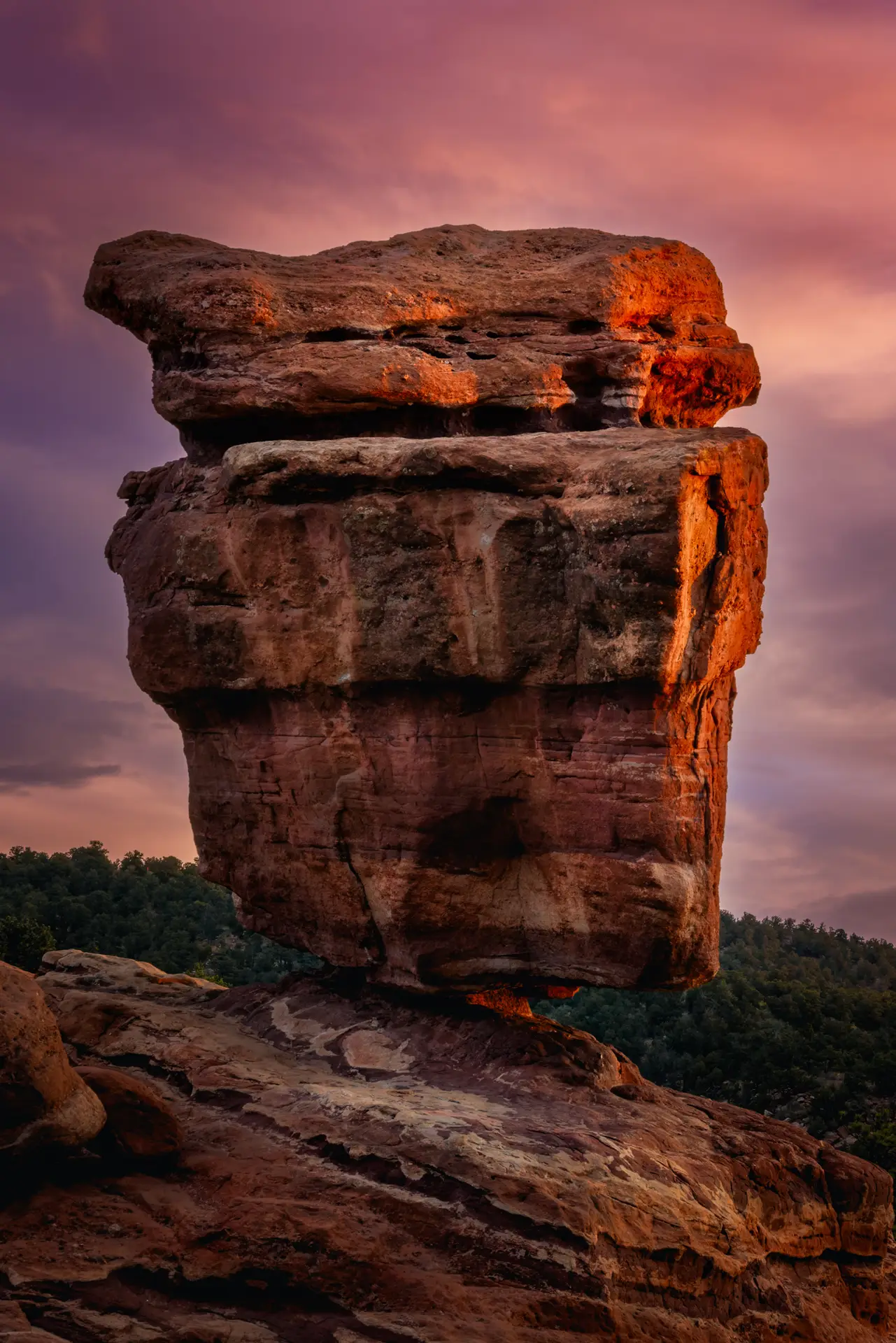
Long before I ever locked my tripod into place at Garden of the Gods, a morning image of Balanced Rock was a shot I had been actively visualizing for weeks. My goal wasn’t just to get a standard tourist snapshot; I wanted to capture a spectacular, clean morning glow. To achieve the exact look I envisioned, I knew it would require a pristine sunrise. I wanted an angle that emphasized the dramatic tilt of the formation—making it look as though it were actively tipping over the edge—and I needed the morning sun to perfectly illuminate the front face and the underside of the rock.
Turning that vision into reality started weeks in advance. I did a dedicated scouting trip to walk entirely around the formation, analyzing the terrain and studying how the light breaks across the stone. Scouting is easily one of the most important tools in a photographer’s arsenal, and putting in that quiet time beforehand is the ultimate key to success. Armed with that knowledge, I spent several weeks patiently monitoring weather apps on my days off, waiting for the perfect clear morning. The moment the weather gave me a definitive green light, I woke up at 1:00 AM to make the drive down to Colorado Springs. I always aim to be the very first vehicle in the parking lot. Arriving before anyone else is usually a great indicator of a successful shoot because it guarantees you get to claim the exact vantage point you need without compromise.
For this composition, I chose to shoot with my 70-200mm lens. Because Balanced Rock is such a massive, imposing, and heavy object, my goal was to intentionally reduce the depth-of-field perspective between the foreground and the sky. Utilizing a telephoto zoom allowed me to compress the entire shot, pulling the background sky closer and squeezing the elements together to emphasize the sheer weight, scale, and gravity-defying presence of the formation.
I set up my tripod in the dark, locked into position, and ran a few quick test shots while waiting for the horizon to break. But a crucial mistake was lurking in my camera dashboard, and it was about to haunt me. Just as the rising sun hit the horizon and bathed the underside of the massive rock in a stunning, golden-red light, I pressed the shutter button with pure excitement. Instead of a click, an error message flashed across the screen: Card Full.
In landscape photography, peak light moves with terrifying speed, and I was suddenly trapped in a race against the clock. Fortunately, my camera features dual card slots configured for simultaneous backup. In a frantic scramble in the dim morning light, I had to eject the full primary card, move the backup card into slot one, dive deep into the camera settings menu to disable dual recording, and quickly format the card so the camera would allow me to shoot.
By the time I looked up from the screen to trigger the shutter, the peak intensity of the light had already begun to dim. The speed at which pristine lighting conditions come and go is always astonishing, and it is exactly why so many people miss the perfect window. I left the field worried that the entire trip had been lost to those few lost minutes.
To my complete surprise, when I evaluated the files later, I discovered I had successfully captured the gorgeous morning red sunrise glow. While I occasionally wish that initial, maximum intensity of the light was a fraction stronger in the frame, the resulting image is absolutely beautiful. It just means I have a fantastic reason to head back out and shoot this incredible location again. More than anything, the morning served as a powerful reminder that no matter how many years of professional experience you have under your belt, you are always learning. Sometimes you just have to learn the hard way. Leaving photos on a card from a previous trip because you assume there is “plenty of room” is a risk not worth taking—the best habit is always to download, reformat, and ensure your gear is completely dialed in the night before.