The Hidden Pocket Pond
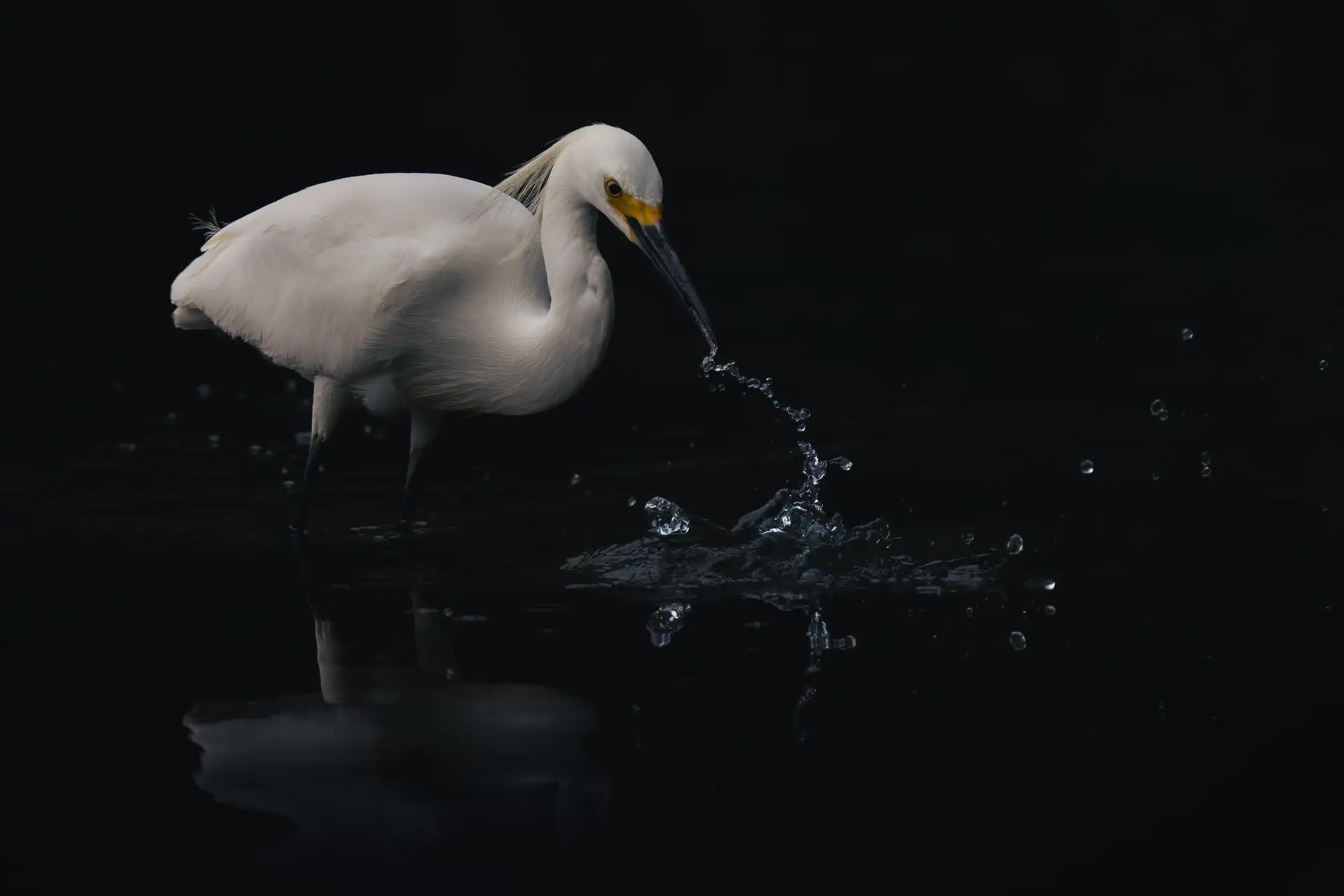
Finding an untouched rhythm in a heavily trafficked state park is the ultimate test of patience when exploring Colorado photography locations. While standard shoreline shots yield decent documentary images, the real magic happens when you discover where native bird species go to hunt completely undisturbed. After weeks of observing flight patterns and scanning the lesser-known marshes of the reservoir, I managed to isolate a secluded, hidden pocket pond—a shallow goldmine where snowy egrets drop in to fish for minnows and crawfish.
Securing the location was only half the battle. To melt completely into the heavy brush and thick cattails, I used full camouflage, breaking up my silhouette to avoid disrupting the natural, skittish behavior of the birds. The field craft paid off. I sat motionless for hours until a magnificent snowy egret finally landed at the far end of the pond and began working its way directly into my field of view.
Gaining Trust and Exposing for Highlights
The brilliant, pure white plumage of a snowy egret offers a flawless canvas for high-end bird photography, provided you handle the dynamic range with absolute precision. The secret to creating deep, impactful contrast lies in the exposure. By spot-metering and bracketing your frames specifically to preserve the bright highlights of the bird’s feathers, you naturally force the darker background elements to fall completely into deep shadow, rendering the messy brush into an ink-black backdrop.
Tracking the bird through a long telephoto lens allowed me to frame exceptionally tight as it put on a clinic, splashing violently and diving its head completely underwater to pull up prey. The intentional underexposure caught every flying water droplet as a crisp, frozen highlight against the dark void, creating a truly high-calibration photograph.
The encounter took an unexpected turn when the egret stopped dead in its tracks and noticed my position. It held a steady, piercing gaze directly at me for a solid five minutes, analyzing the shape hidden in the cattails. Once it determined I wasn’t a threat, it relaxed completely. In fact, it grew so comfortable that it continued its hunt directly toward my blind, eventually crossing inside the minimum focusing distance of my telephoto lens. Because the bird was simply too close for the lens to physically lock focus, I had to freeze, hold my breath, and wait for it to slowly work its way back out a little further away.
I shot continuously until my memory cards were completely full, but our responsibility to the subject doesn’t end when the shutter stops clicking. Instead of immediately packing my gear and blowing my cover—which would have spooked the bird and ruined any future trust—I sat completely still for another fifteen minutes after filling my cards. I watched the egret finish its hunt and leave the pond entirely on its own terms. Respecting those boundaries ensures these birds remain comfortable returning to the same hidden pockets year after year, preserving the integrity of our local Colorado photography locations.
Ultimately, the depth of that afternoon translated perfectly to the gallery wall. Back in the studio, the raw contrast of the files allowed me to print a massive three-panel triptych display for my home. Spanning 30×40 inches per panel, seeing those crisp water droplets and the intense gaze of the egret brought to life at that physical scale is a constant reminder of what can happen when you slow down and let the wildlife dictate the terms of the shoot.